


Three-quarters of anticancer agents used in medicine are derived from natural sources, but their extraction from biomass requires large amounts of volatile and toxic organic solvents, posing risks to human health and the environment. Moreover, bioactive compounds often show low bioavailability, poor water solubility, and limited stability. This project aims to replace traditional toxic solvents with environmentally friendly alternatives and improve the bioavailability of bioactive compounds b...
The SHIFT project aims to shift and solve the challenge of producing scalable,
freestanding transition metal oxide (TMO) membranes, which offer exceptional flexibility and adaptability for advanced quantum devices and energy-efficient technologies. By employing state-of-the-art methods such as Pulsed Laser Deposition (PLD), Angle-Resolved Photoemission Spectroscopy (ARPES), and Scanning Tunneling Microscopy (STM), the project develops innovative approaches that shift the boundaries of...
The main ambition of Psycho_Metabo project is to help deliver effective and safe adjunct therapy for depression. Depression treatment is an uphill battle due to low efficiency and serious side effects of antidepressants. Gut microbiota-based treatments emerged as a promising ally; however, mechanisms of action still wait to be discovered. Novel GABA-producing bacterial strain Phocaeicola vulgatus NGB218, isolated and characterized during our previous study (NextGenBiotics, SFRS, IDEAS), ameli...
The NIMPHA project is dedicated to developing of a ballistic method for transporting medications through the membranes of superficial cells, bypassing the standard endocytosis process. The methodology is based on the use of nanomotors that are activated and propelled by light in the near-infrared region of the spectrum, allowing precise control of the nanomotors' available energy range through light intensity regulation. The expected results of the NIMPHA project will contribute to the develo...
Parkinson’s disease (PD) is a neurodegenerative disorder with motor and non-motor symptoms related to dopaminergic loss. This project compares two innovative neuromodulatory therapies: the non-invasive SAINT protocol and the invasive burst DBS in a 6-OHDA rat model. Using behavioral, neurochemical and synaptic analyses, Serbian and Canadian teams will evaluate their efficacy and mechanisms. This collaboration will pioneer translational insights and optimize PD treatments and therapeutic outco...
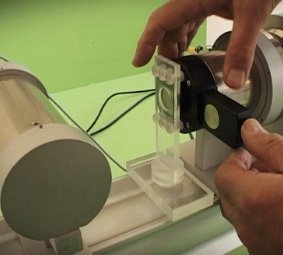
the list of research instruments

Services, acreditation, motors and vehicles